
Why the right disc matters
Finding the right cutting disc can feel like a puzzle, especially when you need to slice through tough stainless steel without slowing down your workflow. You probably have a toolbox full of generic aluminum oxide wheels that wear out fast and leave ragged edges that need extra cleanup. What if there were a disc that stayed sharp longer and kept cuts clean, even at high speeds? That is exactly the promise behind the ceramic cut disc line offered by Air Supply Tools. When you pair a reliable disc with a proper grinder, you can finish a job in half the time and keep the metal looking professional. The key is to understand the material composition and the speed limits that each disc can safely handle. That knowledge turns a frustrating trial into a smooth routine.
Cutting discs are thin wheels that spin at very high RPM to slice through metal like a pizza cutter for dough. The diameter determines how much material you can reach and the thickness influences how much material is removed with each pass. A smaller disc, such as a three-inch size, is perfect for tight spaces, while a larger seven-inch wheel gives you more surface area for big cuts. The grit number tells you how coarse the abrasive is, where a lower number like 46 is coarse enough to cut quickly through stainless. Higher grit numbers would be used for polishing, not for fast removal.
Product Overviews
The Ceramic Cut Disc offers a three-inch diameter and a .035 inch thickness, making it ideal for precise cuts in tight areas. Its ceramic aluminum oxide composition provides a grit 46 surface that stays sharp longer than standard aluminum oxide wheels. The wheel can handle up to 25000 RPM so you can run it on most bench grinders without worrying about overspeed. Because the arbor hole is 3/8 inch, it fits the majority of common grinder spindles. This disc is especially praised for cutting stainless steel cleanly without generating excessive heat. THIS DISC WILL CUT THROUGH STAINLESS LIKE BUTTER.
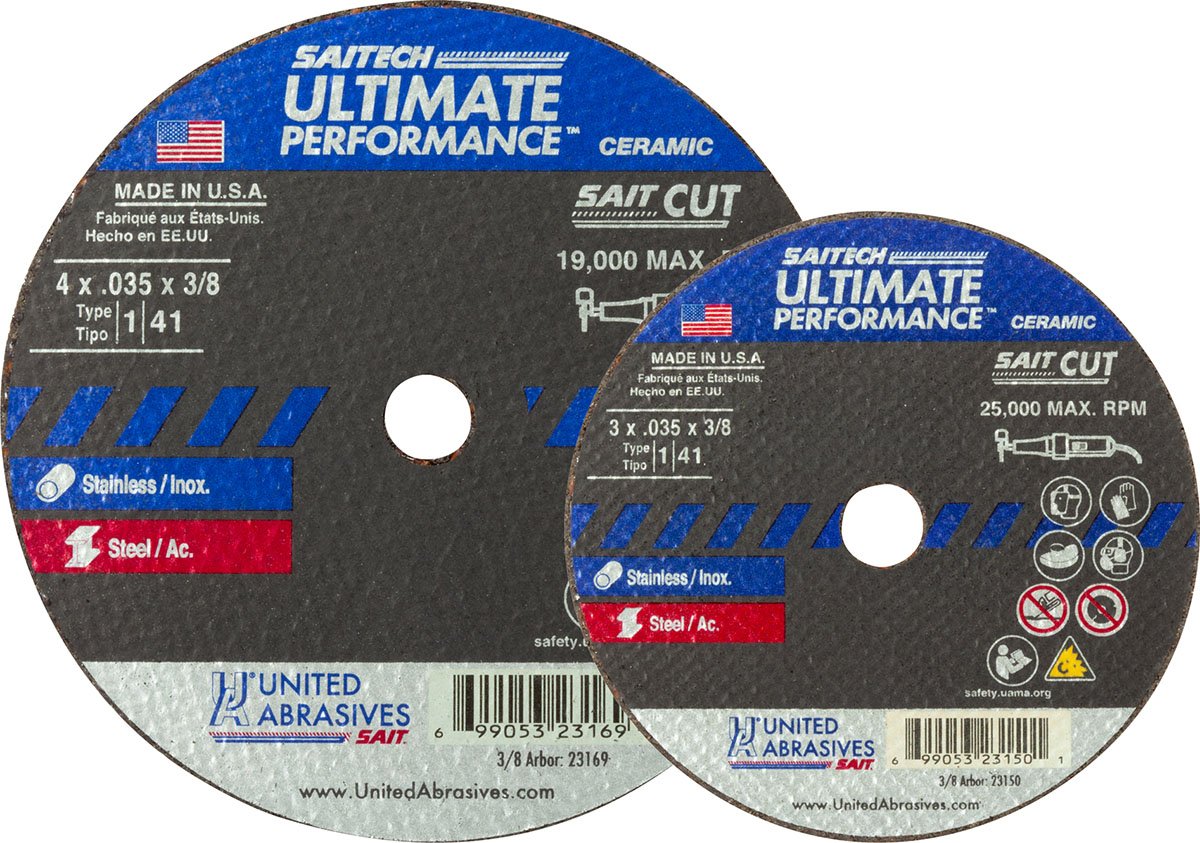
Ceramic Aluminum Oxide Cutting Disc 3" X .035 X 3/8", Ultimate Performance, Great For Stainless Steel
$4.60View ProductThe Saitech Cut Disc measures four and a half inches in diameter and .045 inches thick, giving you a bit more surface for larger cuts. It features a ceramic aluminum oxide grain that outlasts regular aluminum oxide and stays self-sharpening for a longer life. The high-density grain structure provides cooler cuts, which reduces the chance of warping thin metal pieces. External fiberglass layers reinforce the wheel, adding safety, especially in thin, high-speed applications. It is formulated to remove contaminants from stainless steel, leaving a clean edge ready for welding. SAITECH CUT DISC MAKES HIGH TENSILE ALLOYS FEEL LIKE SOFT METAL.
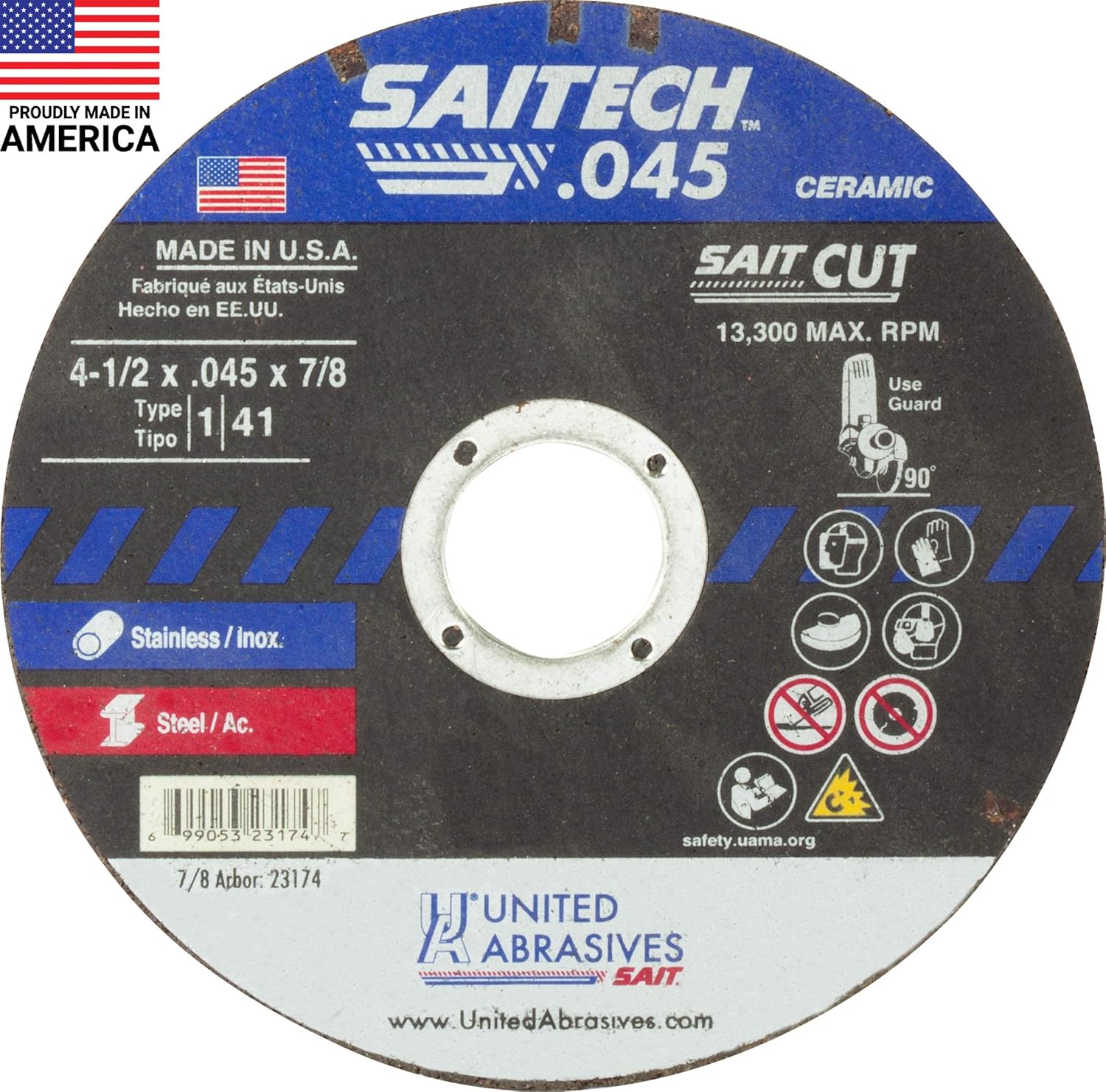
Saitech Type 1 Cut Off Disc 4-1/2" X .045 X 7/8" Ceramic, A/o Grain For Ss & High Tensile Alloys
$4.54View ProductThe Green Corps Wheel brings a seven-inch diameter and a quarter-inch thickness, delivering high-performance grinding and cutting across metal and fiberglass. Its internal diameter of 5/8 11 fits many standard grinders, making tool changes quick and hassle-free. The depressed center design helps keep the wheel balanced, reducing vibration during extended use. Built for durability, it can handle repetitive grinding tasks in automotive repair or metal fabrication. GREEN CORPS WHEEL IS A WORKHORSE FOR ANY WORKSHOP.
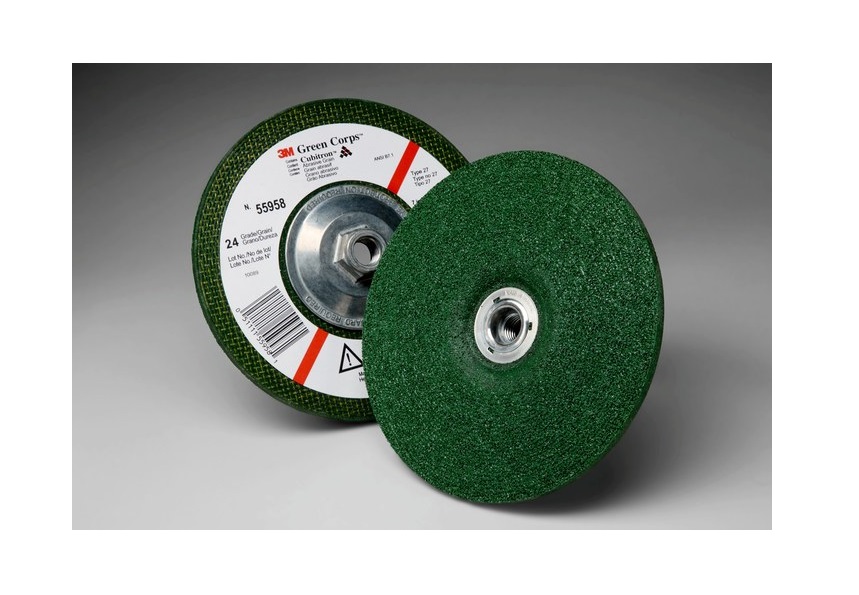
3m Green Corps(tm) Depressed Center Wheel, 24 7 In X 1/4 In X 5/8-11 Internal, 10 Per Box
$130.50View ProductSize grit and application choices
Choosing the right size starts with looking at the space you need to reach and the amount of material you plan to remove. A three inch disc like the ceramic cut disc is perfect for pipe fittings and tight corners while a four and a half inch disc gives you more reach for sheet metal work. If you need to finish a surface after cutting, consider a finer grit wheel, but for fast removal, a grit 46 is a solid choice. Remember, the wheel thickness also affects how much material is taken off each pass; a thinner wheel removes less material but can get into tighter spots.
Safety and tool matching
Safety should never be an afterthought when spinning a disc at thousands of RPM. Always wear eye protection and a face shield to guard against flying fragments. Make sure the grinder is unplugged before changing a wheel and double-check that the arbor size matches the wheel hole. Never exceed the maximum RPM rating printed on the wheel. The ceramic cut disc is rated for 25000 RPM, so keep your grinder below that limit. A balanced wheel reduces vibration, which helps prevent hand fatigue during long sessions.
Most bench grinders have a 5/8 inch spindle, which works with the 3/8 inch arbor hole on the ceramic cut disc using a simple adapter if needed. If your grinder uses a 7/8 inch spindle, you can swap to the Saitech cut disc, which comes with a matching arbor size for a secure fit. The green corps wheel uses a 5/8 11 mounting, which is common on many larger angle grinders, making it a versatile addition to your kit. Check the tool manual for the recommended maximum RPM and always stay within that range to avoid wheel failure.
Maintenance and longevity
To get the most life out of a cutting disc, keep it clean after each use by wiping away metal dust with a dry cloth. Inspect the wheel for cracks or chips before each job. A damaged wheel can shatter at high speed. Store discs in a dry environment away from chemicals that could degrade the ceramic bond. When a disc starts to lose its sharp edge, replace it even if it still spins fine because cutting efficiency drops and you waste energy. Regularly checking the balance of the wheel with a spin test can catch warping early before it becomes a safety issue.
Comparing the options
Between the three options, the small three-inch disc shines for precision work on stainless, while the medium four-and-a-half-inch disc excels on thicker high-tensile alloys and the large seven-inch wheel dominates larger grinding tasks. If you are mainly cutting pipe fittings, the smaller three-inch disc gives you control and reduces material waste. For sheet metal or structural steel where you need a broader cut, the four and a half inch disc provides the extra surface area without sacrificing edge quality. When you move to grinding or sanding large panels, the seven-inch wheel gives you the stability and durability to finish the job quickly.
Real-world use cases
Imagine a home mechanic rebuilding a carburetor; the ceramic cut disc will slice the stainless bolts cleanly, allowing the engine to be reassembled without stripped threads. A fabricator welding stainless frames will appreciate the Saitech cut disc because it removes weld spatter without contaminating the fresh metal surface. A garage shop polishing a car body can use the green corps wheel with a sanding pad to smooth out imperfections before painting. Even a DIY hobbyist building a metal sculpture will find the three-inch ceramic disc perfect for carving fine details while the larger wheel handles bulk material removal.
Budget and sustainability
At $4.60, the ceramic cut disc offers a low entry cost for occasional users while still delivering professional performance. The Saitech cut disc is priced similarly at $4.54, giving you a high-density wheel for a comparable spend. If you need a larger wheel, the Green Corps wheel costs $130.50, but its durability and versatility can offset the higher price over many projects. Consider buying a set of the smaller discs for routine maintenance and keep the larger wheel for heavy-duty jobs to balance cost and capability.
Both ceramic-based discs are made to last longer, reducing the number of replacements and therefore less waste ends up in landfills. When a disc finally reaches the end of its life, check with your local recycling program for metal abrasive disposal guidelines. Avoid throwing the wheel in regular trash, as the ceramic particles can cause environmental harm if not handled properly. Choosing a high-performance wheel that stays sharp reduces the frequency of disposal and supports a more sustainable workshop.
Buying guide summary
To pick the right disc, start by measuring the spindle size of your grinder, then match the arbor hole of the disc. Select a three-inch ceramic cut disc for tight stainless jobs, a four-and-a-half-inch Saitech disc for thicker alloys and a seven-inch green corps wheel for grinding large surfaces. Check the maximum RPM rating printed on each wheel and keep your tool below that range to stay safe. Factor in how often you will use the wheel. Occasional hobby use may only need the inexpensive ceramic disc, while a professional shop will benefit from the durability of the green corps wheel. Finally, consider the total cost of ownership, including replacement frequency and any required adapters to ensure a smooth purchase experience.
Final thoughts
With the right information, you can choose a cutting disc that fits your project budget and safety standards and keep your metalwork flowing smoothly. YOU WILL NEVER WORRY ABOUT A BENT EDGE AGAIN.